
Collection: Wood Chippers
-
BILT HARD 224cc 7.5hp Gas Powered Wood Chipper
Vendor:bilthard
Regular price From $549.99Regular priceUnit price per$609.99Sale price From $549.99 -
BILT HARD 224cc 7.5hp Gas Powered Wood Chipper with Tow Hitch
Vendor:BILT HARD
Regular price $579.99Regular priceUnit price per$709.99Sale price $579.99 -
BILT HARD 212cc 7HP Gas Engine – 4-Stroke OHV with 3/4" Horizontal Shaft, Reliable Replacement for Honda, Yamaha, Kohler, Briggs & Stratton
Vendor:bilthard
Regular price $179.99Regular priceUnit price per$199.99Sale price $179.99 -
15Amp Electric Wood Chipper PS10
Vendor:PowerSmart
Regular price $149.00Regular priceUnit price per$169.99Sale price $149.00 -
15Amp Electric Wood Chipper Leaf Mulcher w/ Collection Bin PS12A
Vendor:PowerSmart
Regular price $189.99Regular priceUnit price per -
301cc 10HP Gas Powered Engine, Horizontal 4 Stroke OHV Gas Motor, Shaft 1" Diameter, 3.48" Length, 1/4" Keyway
Vendor:BILT HARD
Regular price $339.99Regular priceUnit price per$359.99Sale price $339.99


Wood Chippers
A backyard wood chipper turns a Saturday brush pile into garden-ready mulch — and saves you from paying for curbside pickup or burning permits. Whether you're cleaning up after a storm or processing a season's worth of trimmings, this collection brings together the residential chippers and electric mulchers that actually fit a homeowner's workload.
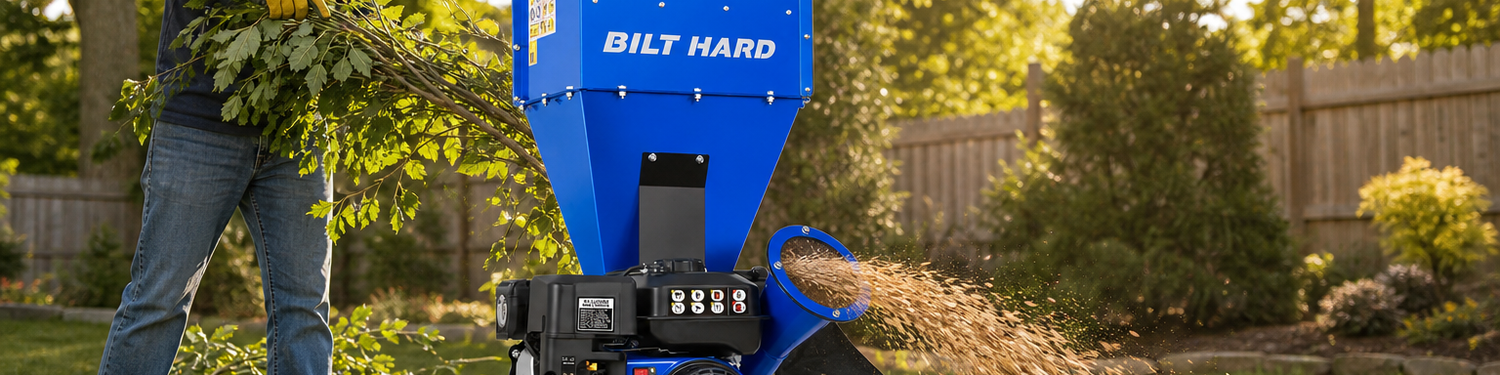
Shop 15-amp corded electric chippers for an afternoon of light yard cleanup — the PS10, DB6610-W, and PS12A (with collection bin) make quick work of leaves, twigs, and branches up to about 1.5". When you're processing real wood, step up to the BILT HARD 224cc 7.5hp gas chippers, which power through limbs up to roughly 3" in diameter and turn an hour's brush into a usable mulch pile. The tow-hitch variant moves easily behind a riding mower or ATV when you'd rather bring the chipper to the wood pile than carry the wood to the chipper. Replacement gas engines (212cc 7hp and 301cc 10hp) are stocked for owners who want to keep older equipment running.
Pair your chipper with the rest of our forestry & winter lineup — a chainsaw or log splitter for the bigger material, and our leaf blowers & trimmers for cleanup. New to home mulching? The Wikipedia overview of woodchippers explains the disc-vs-drum design trade-off, and the USDA Forest Service private-land resources are worth a look if you're managing trees on a larger lot.
Chip the brush, mulch the beds, skip the dump run. Explore the full wood chippers collection and put your yard waste back to work.